Coming Soon: Curriculum about Environmental Markets for Landowners


Silvopasture in Lajas, Puerto Rico
The U.S. Forest Service’s priorities have made developing new market opportunities for forest landowners a critical focus. At its core, it’s really about helping landowners get paid for the good stewardship they’re already doing on their land. Think of it like this: beyond traditional timber income, there are growing opportunities for landowners to be able to be paid to implement conservation practices through soil health, carbon, and biodiversity credits. These markets can seem complex and there is limited awareness among landowners that they exist. The curriculum will provide a foundational awareness about these markets and a balanced understanding of the benefits and barriers involved.
These markets allow landowners to generate revenue by improving forest health, storing carbon, or protecting ecosystems. The Forest Service’s role is to help bridge the gap — providing education, technical assistance, and partnerships so that small and underserved landowners can actually access these opportunities, not just hear about them.
What makes this approach exciting is that it’s not one-size-fits-all. Whether a landowner is in New Mexico managing wildfire risk, in Puerto Rico restoring forests after storms, or in Florida balancing timber and conservation, the idea is to connect their specific goals to the right market pathway.
The Forest Service and its partners are working to simplify what can feel like a complicated space by breaking down concepts, building trust, and creating real entry points. At the end of the day, Environmental Markets is about turning stewardship into opportunity, making sure that taking care of the land can also support a landowner's livelihood. We’ve chosen to focus on environmental markets to ensure that landowners, who have a crucial role in caring for the land, are aware of all the resources that are available to fund ecosystem services.
Environmental markets are one funding route that can support landowners’ conservation efforts by generating income from forest stewardship practices. For example, in Jemez Pueblo, New Mexico, Indigenous-owned Walatowa Timber Industries produces telephone poles, traditional vigas – beams used as support in adobe homes – and wood pellets from trees that were largely removed as part of thinning and fuel reduction efforts. The pellets are then used as an alternative fuel source for heating homes. (For more, check out our recent Instagram post based on Asekia team members’ recent visit there.)
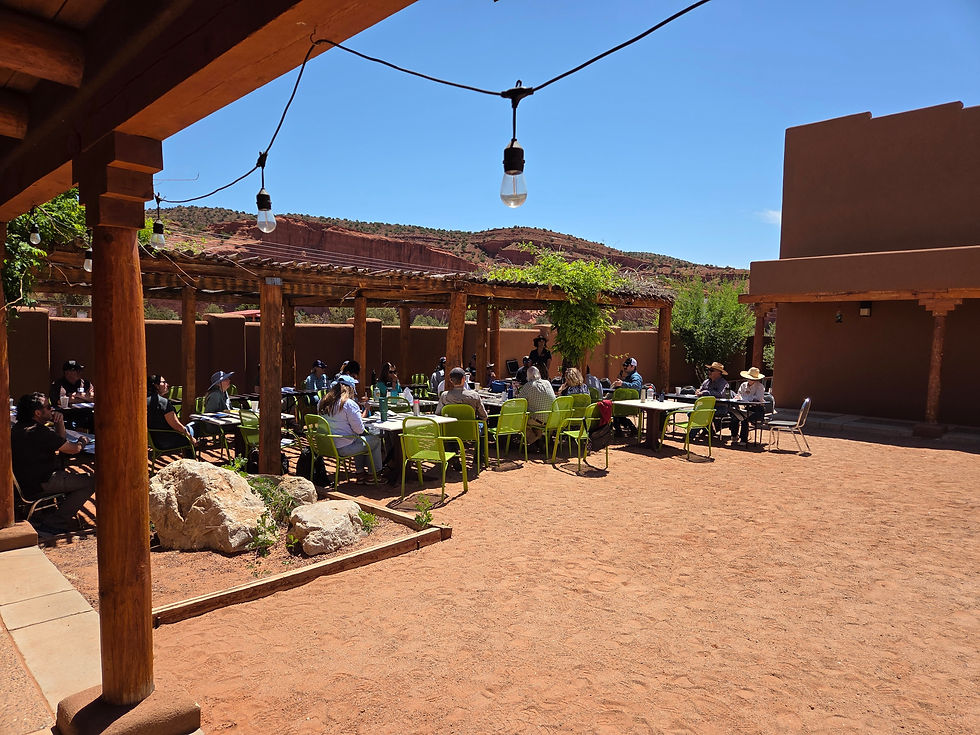
Asekia team members visited Walatowa Timber Industries in June 2026.
Environmental Markets Curriculum
This new curriculum aims to build a fundamental understanding of how these environmental markets work so that landowners can make the decisions that are best for them about potentially pursuing any of these opportunities.
These free, self-paced courses will be accessible through our website, asekia.org, and will be available in both English and Spanish. Participants will have the freedom to complete the courses on their own timeline. Upon finishing the course, each participant will receive a certificate of completion to recognize their accomplishment. The curriculum will also be interactive – after it launches this fall, we plan to host live Q&A sessions with the course creators to explore each topic more deeply.
Topics Included in the Curriculum:
Biodiversity Credits
Afforestation/Silvopasture
Improved Forest Management
Contract Literacy
Heirs' Property
The topics in the curriculum are designed to include information that can also benefit landowners in other endeavors beyond the scope of environmental markets. For example, the legal module will focus on how to read a contract and make sure it’s right for you – a skill that supports landowners who are interested in exploring environmental markets but could also apply to more established endeavors, such as a timber harvest.
Market of the Month
This article is the first installment in our new Market of the Month series! Each month, we’ll publish an article that explores one of the topics in the curriculum. The series will continue in July with an article about silvopasture that will focus on how to implement this agroforestry practice and how it can benefit farmers, livestock, and local ecosystems, including as a way to generate additional revenue.
To learn more about the environmental markets curriculum or if you have any questions about the program, contact us at info@asekia.org. Stay tuned for more updates!


Comments