Lessons from Finca Tierra de Sueños: How Forests Shape Organic Farming

At Finca Tierra de Sueños in Costa Rica, forests and farming intertwine in an organic agricultural system focused on building healthy soils that nourish crops, communities, and the local ecosystem in the mountainous region of Tapezco. This integrated system reflects the life-long work of Juan José (‘J.J.’) Paniagua Guerrero.
The farm established by Juan José Guerrero and his family has grown to become internationally recognized for its pioneering practices and also hosts its own sourdough bakery, a feature that supports local families and adds value to the farm’s products. Juan José has also traveled to places including the Dominican Republic to share his agricultural knowledge.
Juan José’s journey in organic farming began nearly 40 years ago when he transitioned from conventional farming, including the use of agrochemicals, to organic practices. Now, at his farm in the mountains of Tapezco, crops such as beets, carrots, lettuce, and cabbages sprout from rich, dark soil brimming with life – worms, spiders, and other species that are signs of a healthy ecosystem. This diversity is central to the resilience of the farm. The depth of the farm’s soil also serves as a buffer against some of the effects of severe weather, such as drought, heat, and intense rainfall, that can stress farming systems and lower crop yields.
He distills some of the essentials of organic farming into a list of three S’s: sun, shade, and soil. Additionally, Juan José focuses on the list of three M’s that contribute to healthy soil: microorganisms, organic matter, and minerals – all of which can be found in the forest. These principles guide his soil management and help farmers understand how forest systems naturally regenerate life.

Juan José (‘J.J.’) Paniagua Guerrero in the forest at Finca Tierra de Sueños
“The forest is a natural laboratory that’s full of life…Having the forest is already the greatest wealth,” he says, adding that forest soil is rich in all three M’s and has an ideal pH for agriculture. “What we do is collect the microorganisms, which are in these broken-down leaves, and we reproduce them with semolina and molasses.”
The forest also supports local wildlife. At his 5-hectare farm (approximately 12 acres), Juan José has observed dozens of species of birds, butterflies, and wild animals including raccoons, coyotes, and ocelots (a type of small wild cat).
Juan José encourages farmers to visit other farms that have established organic practices, providing them with inspiration and excitement about their own organic farming projects. Exposure to successful organic farms helps farmers visualize what is possible and reduces fear of transitioning away from chemicals. He encourages farmers to respect the soil above all and to “take care of the environment, future generations, and their health.”
Below are three practices Juan José implements to protect crops and improve soil health:
Living Fences (Windbreaks)

Living fences at Finca Tierra de Sueños
Planting shrubs or trees acts as a barrier that protects crops from wind. Depending on the season, wind speeds at Finca Tierra de Sueños can reach more than 60 miles per hour, making it crucial to reduce the potential for wind-related damage. Before adding these barriers, crops such as cabbage suffered repeated wind damage.
Juan José adds that these living fences also help to divide the farm into lots, making it easier to plan crop rotation and adding aesthetic value.
Contour Planting
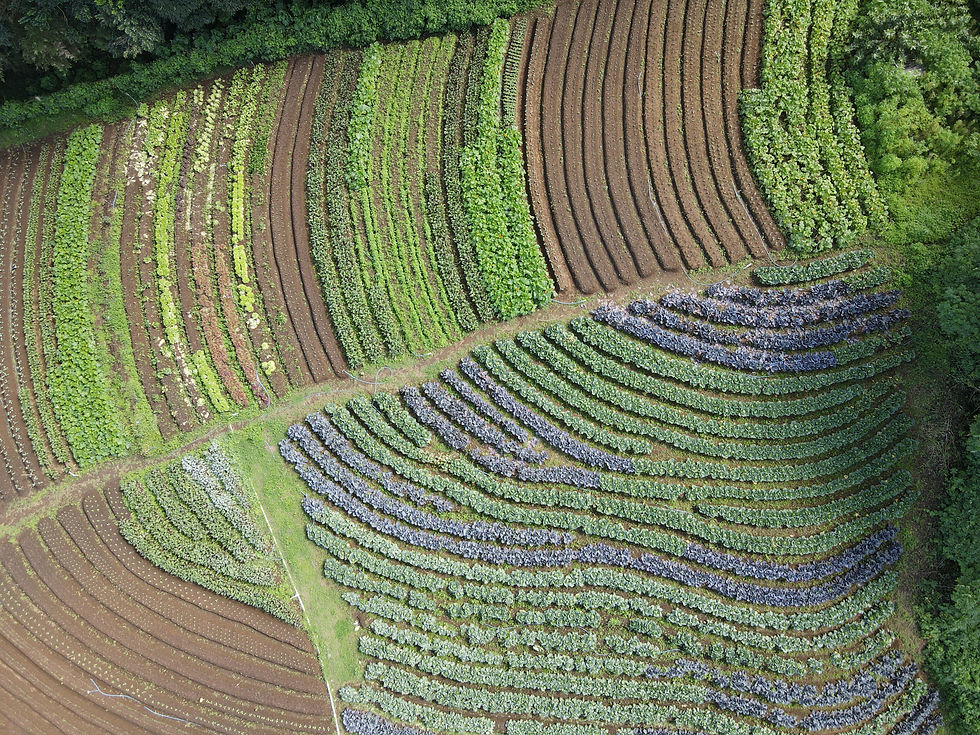
Contour planting at Finca Tierra de Sueños
Using a level to plant at the same elevation across slopes, known as contour planting, enables the land to absorb more water, reducing the amount of water that runs off and helping to prevent soil erosion.
The importance of contour planting became clear during a recent extreme rainfall event. Just a few days before our visit to the farm, about 13 inches of rain fell in a span of only two hours, causing several landslides on nearby roads and highlighting the importance of planning for extreme rainfall.
“We need the soil to be prepared for that amount of rain, and the only way to do that is by making drains on the contour so we don’t lose soil,” he says, adding that allowing grass to grow in the pathways between rows of contour-planted crops also helps to prevent erosion. “It’s no use making soil if it gets washed away…the soil supports everything.”
Using ‘Good Weeds’ to Improve Soil
Weeds are often seen as a problem for farmers, but at Finca Tierra de Sueños, they serve a vital purpose. Juan José refers to these as ‘buenazas’—fast-growing plants that add organic matter when chopped and folded back into the soil. Incorporating them into the soil is an effective way to rapidly increase the amount of organic matter in the soil, creating a richer environment for crops to grow in, Juan José explains.
His practices offer powerful lessons for farmers across Latin America and the Caribbean. As Asekia continues to promote sustainable agriculture, examples like Finca Tierra de Sueños demonstrate how traditional knowledge and forest ecology can guide the future of farming.
For more information about farming practices that conserve natural resources, contact us at info@asekia.org.


Comments